


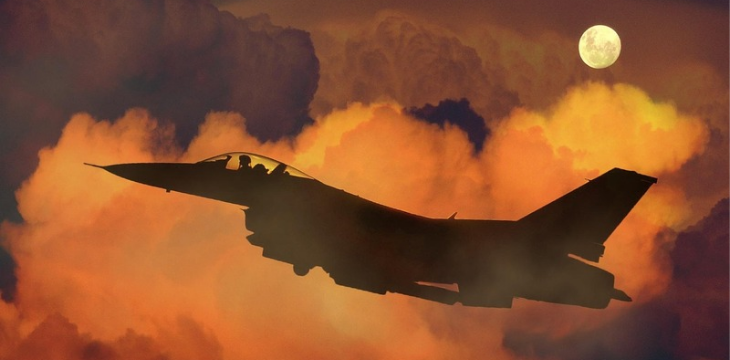
India Sixth Generation Fighter Concept 2026.
India’s proposed sixth-generation platform is envisioned as a tailless fighter built around a blended wing-body and full flying-wing layout. This configuration merges the fuselage and wings into a single lifting surface, reducing drag and minimizing radar reflections from conventional tails and junctions.
The India sixth generation fighter concept 2026 aims to revolutionize aerial combat with cutting-edge technologies.
- Tailless geometry reduces radar signature by eliminating vertical and horizontal tails that typically act as strong radar reflectors.
- A lifting-body style layout allows the entire airframe to generate lift, improving efficiency and payload potential over legacy tube-and-wing fighters.
Morphing Wings And Shape Memory Alloys.
A defining feature of the concept is real-time morphing wings that change shape in flight using shape memory alloys (SMAs) instead of traditional flaps and control surfaces. DRDO scientists have already demonstrated flight-capable wing segments where leading edges and camber can be altered dynamically within milliseconds.
With the India sixth generation fighter concept 2026, the aircraft can adapt in real-time to various combat scenarios.

- SMAs act like artificial muscles, reconfiguring wing geometry without external hinges or gaps, which improves both stealth and aerodynamic smoothness.
- Morphing allows a single airframe to optimize for takeoff, cruise, high-altitude loiter, and high‑G manoeuvres without the fixed-compromise wing designs used today.
Stealth, Sensors, And Internal Volume.
The blended wing-body/flying-wing approach is designed to cut radar cross-section while opening up more internal space for fuel, sensors, and weapons. By burying payloads and fuel within the smooth airframe, designers can keep surfaces clean and reduce external hardpoints that normally light up on radar.
This is crucial for the India sixth generation fighter concept 2026, as it seeks to enhance stealth capabilities.
- Continuous curved surfaces and the absence of discrete control surfaces help minimize radar hotspots and panel-edge reflections.
- Extra internal volume supports larger fuel loads and bigger sensor apertures, extending range and boosting situational awareness in networked combat.
Role Of AI, Avionics, And Propulsion.
India’s sixth-gen vision extends beyond airframe shaping to AI-heavy avionics, manned–unmanned teaming, and adaptive propulsion. The fighter is expected to act as an airborne command node that manages drones, fuses multi-spectral sensor data, and coordinates electronic warfare in real time.
The India sixth generation fighter concept 2026 will integrate advanced AI systems for superior decision-making.
- AI-driven mission systems are being explored to perform sensor fusion, threat prioritization, and electronic warfare management while easing pilot workload.
- Concepts include adaptive or variable-cycle engines capable of switching between high-thrust and fuel-efficient modes, while generating enough electrical power for advanced sensors and potential directed-energy weapons.
Program Status And Strategic Significance.
The Aeronautical Development Agency has reportedly begun preliminary research and feasibility work on this tailless sixth-generation fighter, in close coordination with the Indian Air Force. The aircraft is expected to be larger than India’s upcoming Advanced Medium Combat Aircraft (AMCA) and roughly comparable in size to Russia’s Su‑57, though it remains a long-term project without a formal production timeline.
Overall, the India sixth generation fighter concept 2026 represents a significant leap in military aviation.
-
- Early efforts focus on maturing enabling technologies—morphing wings, AI avionics, quantum/photonic sensing, and advanced EW—before committing to a full-scale program.
- Strategically, the concept underscores India’s intent to compete with the US, China, and European consortia in sixth-generation fighter development and to secure greater technological autonomy in future air combat
This initiative is part of the broader strategy behind the India sixth generation fighter concept 2026.
1 thought on “India Sixth Generation Fighter Concept 2026 Revolutionize Aerial Combat.”