


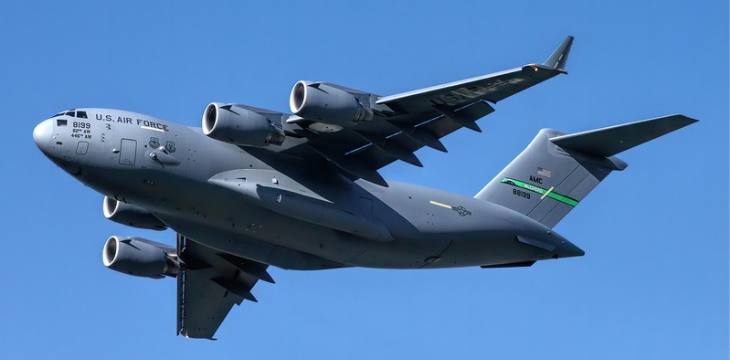
Boeing C 17 Globemaster replacing US Air Force.
There is currently no single, confirmed aircraft directly replacing the Boeing C-17 Globemaster III; instead, the US Air Force (USAF) is shaping a long‑term “next‑generation airlifter” roadmap that will gradually take over the C‑17’s role from the 2040s onward. Boeing C 17 Globemaster replacing US Air Force The Simple Flying article you shared discusses this transition story, using the C‑17’s legacy and future concepts like the Next Generation Airlift (NGAL) as its core narrative.
C‑17 Globemaster’s Future: What Will Replace The USAF’s Workhorse?
For more than three decades, the Boeing C‑17 Globemaster III has been the backbone of American strategic airlift, hauling everything from main battle tanks to humanitarian supplies into short, rough runways around the world. Boeing C 17 Globemaster replacing US Air Force With production long ended and airframes steadily aging, a key question looms over Air Mobility Command (AMC): what aircraft is set to replace the iconic C‑17 in US Air Force service?
The answer is more complex than a simple one‑for‑one swap, and it reveals how radically airlift operations are expected to change by mid‑century.
The Legacy Of The C‑17.
The C‑17 was designed to bridge a gap: it could carry much of the heavy payload traditionally reserved for the Lockheed C‑5 while still operating from shorter and less‑prepared runways, something the older C‑141 Starlifter and commercial‑derived transports simply could not achieve. With a maximum payload of around 77 tonnes, a rear loading ramp, and the ability to back up under its own power, the Globemaster became the definition of flexible strategic and tactical lift in one airframe.
From high‑tempo operations in Iraq and Afghanistan to rapid humanitarian responses after earthquakes and pandemics, the C‑17 proved it could deliver outsized cargo where civilian‑style widebodies would never dare to land. Boeing C 17 Globemaster replacing US Air Force This combination of range, payload and rough‑field performance is exactly what makes the aircraft so hard to replace.

Why the USAF Needs a Successor.
Despite its stellar reputation, the C‑17 fleet is not immortal. Some airframes accumulated heavy fatigue during the surge years in the Middle East, and the type is projected to remain in front‑line service into the 2070s if nothing changes. Boeing C 17 Globemaster replacing US Air Force Keeping a 1990s‑era design combat‑relevant against modern long‑range air defenses and maintaining complex legacy systems for 80 years is neither cheap nor operationally ideal.
USAF leaders have therefore started to outline a path to a new strategic airlifter that can survive in contested airspace, integrate advanced networking, and still move massive loads across intercontinental distances. Boeing C 17 Globemaster replacing US Air Force Rather than building a “C‑17 2.0,” the service wants a clean‑sheet design optimized for the threat environment of the 2040s and beyond.
Enter NGAL: A Single Giant Successor.
The center of this future vision is a concept known as the Next Generation Airlift, or NGAL. In policy documents and strategy memos, AMC describes NGAL as a single strategic airlifter that will eventually take over from both the C‑5M Super Galaxy and the C‑17A Globemaster III.
The plan is staged:
-
One NGAL will first replace one C‑5M until the entire C‑5M fleet retires around the mid‑2040s.
-
After that, NGAL will begin replacing the C‑17A fleet on a one‑for‑one basis, stretching into the 2070s.
This approach is ambitious, because the C‑5M and C‑17 serve overlapping but distinct roles, with huge differences in payload and volume. Boeing C 17 Globemaster replacing US Air Force Designing a single aircraft that can credibly handle both missions while surviving advanced threats will demand careful trade‑offs in size, agility, and survivability.
What the Next‑Generation Airlifter Must Do.
While NGAL is still conceptual, senior mobility leaders have sketched out some of the attributes they want to see. Among the priorities are
-
Survivability in contested airspace: The new airlifter will need robust defensive systems, including countermeasures against long‑range missiles and integrated sensors to detect threats earlier.
-
Improved agility and field performance: Even at a strategic size, the aircraft must still operate from shorter or partially damaged runways, preserving one of the C‑17’s greatest advantages.
-
Range and payload suitable for Indo‑Pacific distances: With the Pacific theater in mind, long legs and the ability to carry heavy loads between island and mainland bases will be essential.
-
Easier sustainment and modern systems architecture: Open‑systems avionics, modular components, and better maintainability should keep lifecycle costs under control and allow rapid upgrades.
These requirements make it unlikely that an existing commercial aircraft like the Airbus A330 Multi Role Tanker Transport (MRTT) could simply “replace” the C‑17, despite recurring online speculation. Boeing C 17 Globemaster replacing US Air Force The A330 MRTT lacks a full‑width rear ramp, has higher runway and ground‑equipment demands, and cannot match the C‑17’s rough‑field flexibility, even if it offers impressive fuel and payload for more benign environments.

NGIA: The Tactical Side Of The Puzzle.
Alongside NGAL, the USAF is also studying a Next Generation Intra‑theater Airlift (NGIA) platform aimed at regional, tactical logistics. Boeing C 17 Globemaster replacing US Air Force This concept focuses on aircraft that can “fight through” damaged or austere infrastructure over shorter distances, complementing larger strategic lifters rather than replacing them.
NGIA aircraft would be optimized for:
-
Rugged, short runways in contested areas.
-
Rapid delivery of smaller loads like dispersed units, munitions, and fuel.
-
High survivability when operating closer to the front line.
In that sense, NGIA would sit closer to the C‑130J Hercules in the mobility ecosystem, while NGAL takes over the global, heavy‑lift mission now dominated by the C‑5 and C‑17. Boeing C 17 Globemaster replacing US Air Force The two programs together signal a broader rethink of how the USAF moves forces around in a world of anti‑access/area‑denial threats.
How Long Will The C‑17 Keep Flying?
Even as planning accelerates, the C‑17 is not disappearing anytime soon. Strategic documents indicate that the USAF intends to keep the type operational potentially into the 2070s, which means some aircraft could be in service for around 80 years. Boeing C 17 Globemaster replacing US Air Force That longevity, however, assumes continuous investment in sustainment, upgrades, and structural life‑extension work across the fleet.
Production has already ended, so keeping 200‑plus Globemasters flying depends on careful fleet management, including:
-
Prioritizing structural repairs for high‑time aircraft.
-
Modernizing avionics and defensive suites.
-
Managing utilization so no single tail is overstressed.
For operators and aviation fans, this means the C‑17 will remain a familiar sight at air shows, humanitarian hubs, and forward operating locations for decades, even as design work quietly progresses on its eventual successor.
So, what is really replacing the C‑17?
The key takeaway is that there is no off‑the‑shelf “C‑17 replacement” sitting in a hangar today. Instead, the USAF is laying the groundwork for a next‑generation strategic airlifter—NGAL—that will gradually assume both C‑5M and C‑17 duties starting in the mid‑2040s, extending well into the second half of the century.
Until that aircraft leaves the drawing board and enters flight test, the Globemaster III will remain what it has been since the 1990s Boeing C 17 Globemaster replacing US Air Force the workhorse of American air mobility, Boeing C 17 Globemaster replacing US Air Force carrying an unmatched mix of payload, range, and rough‑field performance that no current aircraft, military or civilian, can fully replace.
1 thought on “Boeing C 17 Globemaster replacing US Air Force (USAF)”