


A New Class Of Chinese Power Projection.
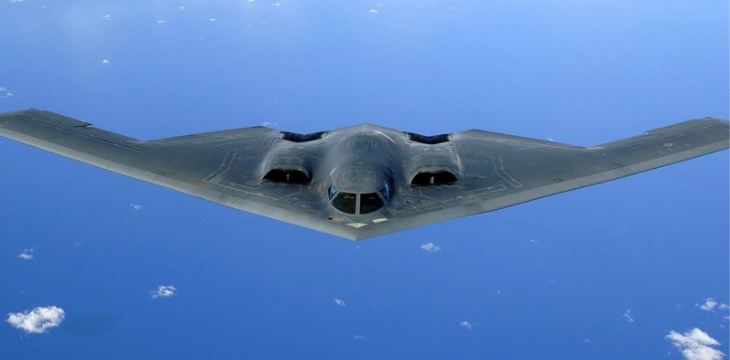
China’s emerging intercontinental-range stealth bomber appears to be a very large flying‑wing aircraft designed to give the PLA Air Force the ability to strike targets across the Pacific and potentially the U.S. mainland, placing it in the same elite category as America’s B‑2 Spirit and B‑21 Raider. a new class of chinese power projection New satellite imagery and limited public footage suggest a platform with a wingspan comparable to the B‑2, likely optimized for long‑range, low‑observable penetration missions using a mix of nuclear and advanced conventional weapons.
The development of a new class of chinese power projection enhances China’s military reach and capabilities.
first clear glance of China’s stealth intercontinental bomber.
For decades, China relied on derivatives of the H‑6 bomber, an updated version of a 1950s Soviet design that lacked stealth, payload, and range compared to U.S. strategic bombers. Work on a true next‑generation bomber, widely associated with the Xi’an H‑20 program, was acknowledged by Chinese officials in 2016 and framed as a strategic project to give Beijing genuine intercontinental reach from bases on its own territory.
This commitment to a new class of chinese power projection demonstrates China’s ambition to play a significant role on the global stage.
An intercontinental stealth bomber drastically changes how far and how flexibly Chinese air power can operate compared to current cruise‑missile‑armed H‑6 variants, which depend on staying well outside dense allied air defenses. By contrast, a low‑observable flying‑wing bomber is designed to slip through radar networks and prosecute high‑value targets deep in an adversary’s rear, including hardened command infrastructure and air bases.
This capability marks a new class of chinese power projection that can challenge traditional military strategies.

Design: Flying Wing, Massive Range.
Imagery from a PLA test base near Malan in Xinjiang shows a very large flying‑wing aircraft housed in hangars similar to those used for the U.S. B‑2 Spirit, indicating comparable size and mission profile. Estimates from that satellite photography put the Chinese aircraft’s wingspan at about 52 meters, nearly identical to the B‑2 and substantially greater than the roughly 40‑meter wingspan of the newer B‑21 Raider.
Open‑source military assessments suggest the bomber could have a total range exceeding 10,000–13,000 kilometers, a combat radius on the order of 5,000 kilometers, and a bomb load possibly in the 30–40‑ton class, far surpassing the capabilities of the H‑6K. a new class of chinese power projection With aerial refueling, that radius could be extended to truly global reach, turning Chinese bases on the mainland into starting points for missions that can threaten targets across the Pacific and beyond.
The implications of this new class of chinese power projection are profound for regional security dynamics.
Stealth, Payload, and Possible Unmanned Capability.
The aircraft’s pure flying‑wing geometry, clipped wingtips, and lack of external stores are all consistent with a radar‑low‑observable design intended to remain hard to track across multiple radar wavebands. Large internal weapons bays, similar in concept to those on the B‑2 and B‑21, would allow the carriage of guided bombs and long‑range cruise missiles while preserving a low radar cross‑section.
One of the more intriguing details from satellite images is the apparent absence of a visible cockpit, which has led some analysts to argue that this may actually be an unmanned intercontinental‑range bomber, or at least a design that could be fielded in both manned and unmanned forms. China has already invested heavily in large stealth flying‑wing UAVs such as the GJ‑11 and CH‑7, giving its industry a head start in the control algorithms, autonomy, and secure datalinks necessary for a long‑endurance unmanned bomber.
Investments in this new class of chinese power projection suggest a shift in how China plans to engage globally.
Strategic Targets and Mission Profile.
The primary mission of this bomber class is strategic strike: penetrating heavily defended airspace to hit key military targets, including bases, ports, logistics hubs, early‑warning radars, and nuclear‑related infrastructure. Its ability to deliver both nuclear and conventional payloads would make it a central component of China’s nuclear triad, complementing intercontinental ballistic missiles and ballistic‑missile submarines with a flexible, recallable airborne leg.
This strategic shift represents a new class of chinese power projection that aims to redefine military engagements.
Beyond nuclear deterrence, a stealth bomber with this range gives Beijing new options to threaten U.S. and allied facilities across the Western Pacific, such as Guam, Hawaii, and potentially even targets on the continental United States, thereby complicating American force‑deployment planning. In a conventional conflict, such a platform could also support suppression of enemy air defenses, maritime strike campaigns against carrier groups, and theater‑opening attacks to blind adversary sensors and degrade their ability to coordinate.
Such advancements solidify a new class of chinese power projection that provides Beijing with new strategic options.
Implications for the Global Bomber Balance.
China’s move into the intercontinental stealth bomber club narrows a domain that was long dominated exclusively by the United States and, to a lesser extent, Russia’s non‑stealthy long‑range bombers. a new class of chinese power projection If the bomber enters service in meaningful numbers, it would significantly diversify China’s options for holding distant targets at risk, forcing Washington and its allies to invest more heavily in dispersed basing, hardened infrastructure, and advanced air‑and‑missile defense networks.
In conclusion, this new class of chinese power projection could alter the balance of power in the Asia-Pacific region.
At the same time, open‑source reports emphasize that many details about the aircraft’s production timeline, sensor suite, mission systems, and exact stealth performance remain uncertain, and some U.S. analyses argue it is still years from becoming a deployed, large‑scale operational threat. a new class of chinese power projection Nonetheless, the emergence of a large intercontinental stealth bomber—whether manned, unmanned, or mixed—confirms that China is determined to match the United States not just in regional airpower but in global‑reach strategic aviation.
1 thought on “China’s Emerging Intercontinental-Range Stealth Bomber.”