


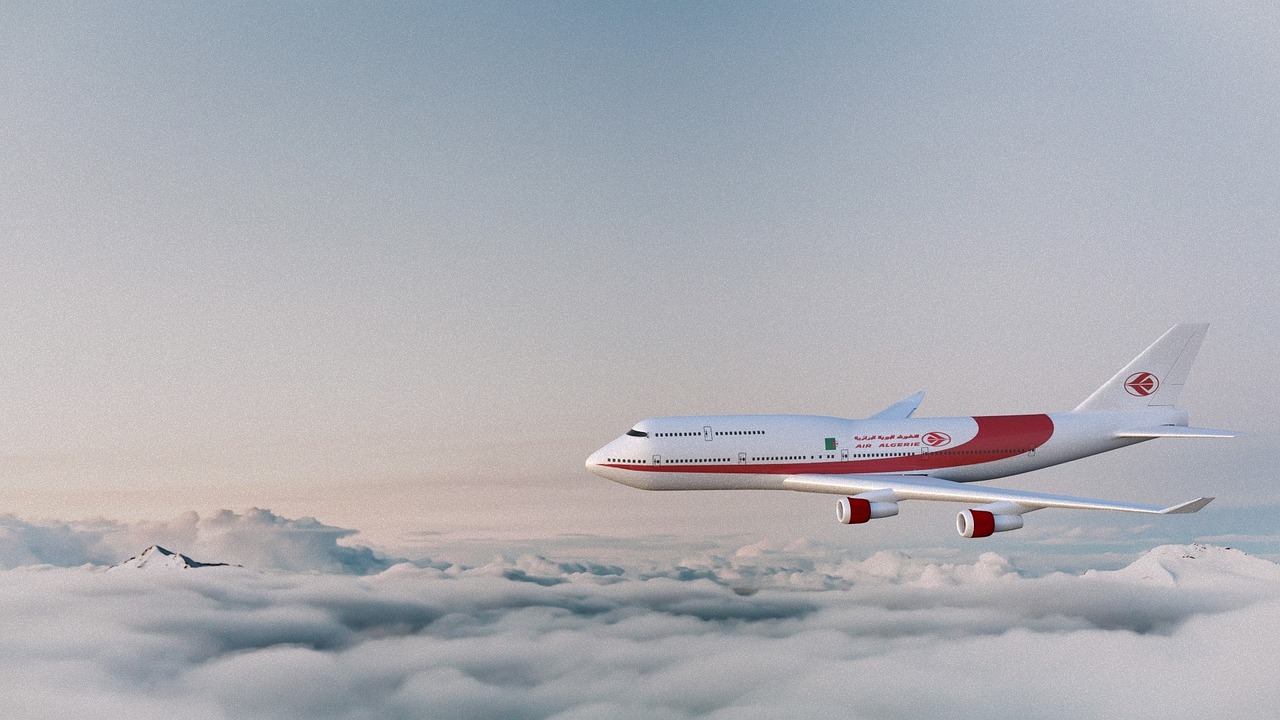
Evolution of commercial jet speeds and aviation exploded.
Newer commercial aircraft cruise slower than many older designs primarily due to fuel efficiency demands, as drag rises exponentially at higher Mach speeds, prioritizing cost savings over raw speed in an era of expensive fuel.
Commercial aviation exploded post-World War II with jets like the Boeing 707 and Douglas DC-8, which dashed at Mach 0.8-0.85, slashing transatlantic flight times and fueling the jet age boom. Evolution of Commercial Jet Speeds These early workhorses, including the Boeing 727 trijet introduced in 1963, routinely cruised at Mach 0.84—faster than many modern counterparts—thanks to abundant cheap fuel and less emphasis on operating costs. Pilots from that era recall the thrill of pushing envelopes, but economics soon reshaped priorities.


The 1970s oil crises flipped the script. Airlines faced skyrocketing fuel prices, forcing designers to optimize for range and economy over velocity. Evolution of Commercial Jet Speeds High-bypass turbofans replaced early low-bypass engines, offering 20-30% better efficiency but with a sweet spot at lower Mach numbers around 0.75-0.80, where drag penalties are minimal. Evolution of Commercial Jet Speeds By the 1980s, icons like the Boeing 737 evolved from Mach 0.74 cruisers to slightly peppier later variants, yet still trailed the 727’s pace.
Pilot Insights from the Cockpit
Former airline captain John Chesire, with experience across Boeing 727, 737, and Airbus A320, noted his surprise at the 737’s slower cruise compared to the venerable 727. “Fuel was cheap back then,” he observed, linking the shift to exponential drag increases near higher Mach speeds that guzzle fuel. Transitioning to the A320, he appreciated its marginal edge over the 737—Mach 0.78 versus 0.74 but still slower than the 727’s 0.84
Chesire highlighted marketing tweaks, like the 737-800 bumping to Mach 0.78 to rival the A320, rather than pure efficiency gains. Widebodies tell a similar tale: the Boeing 747-400 hit Mach 0.85 cruise, akin to the 727, while the efficient Boeing 777 and Airbus A380 settle at 0.84-0.85 max, balancing speed with economy on long hauls.
Key Speed Comparisons.
| Aircraft | Cruise Mach | Max Mach | Era |
| Boeing 727 | 0.84 | 0.90 | 1960s-80s |
| Boeing 747-400 | 0.85 | 0.92 | 1980s-00s |
| Boeing 737 (classic) | 0.74 | 0.82 | 1960s-90s |
| Boeing 737-800 | 0.78 | 0.82 | 1990s+ |
| Airbus A320 | 0.78 | 0.82 | 1980s+ |
| Boeing 777 | 0.84 | 0.87 | 1990s+ |
| Airbus A380 | 0.85 | 0.89 | 2000s+ |
This table underscores the trend: narrowbodies slowed most, while long-range widebodies retained higher speeds for profitability on distance.


Aerodynamics and Fuel Realities.
At subsonic speeds, aircraft encounter compressibility drag as air nears Mach 1, surging fuel burn by 50% or more beyond optimal cruise. Evolution of Commercial Jet Speeds Engineers target the “knee of the curve”—around Mach 0.77-0.80—for minimal thrust specific fuel consumption (TSFC), vital as fuel comprises 30-40% of airline costs today. Newer wings, with higher aspect ratios and winglets, further enhance lift-to-drag ratios at these speeds, enabling longer ranges without refueling.
Laminar flow research and composite materials in birds like the Boeing 787 aim to push envelopes slightly, but revolutionary speed hikes remain elusive amid noise regulations and airspace constraints. Supersonic dreams, once pursued by Concorde (Mach 2), crashed on economics—its fuel thirst was 10x a 747’s—leaving subsonic efficiency king.
Future Horizons for Faster Skies.
Boom Supersonic’s Overture promises Mach 1.7 revival with sustainable fuels, targeting 2029 service, but faces certification hurdles. NASA’s X-59 quest for quiet supersonic overland flight could redefine norms, yet commercial viability hinges on costs below $5,000 per hour. Evolution of Commercial Jet Speeds For now, airlines like Ryanair and Southwest thrive on efficient Mach 0.78 cruisers, proving slower can mean steadier profits.
Blended wing bodies and hydrogen propulsion loom on the horizon, potentially reclaiming speeds while slashing emissions 70%. Evolution of Commercial Jet Speeds Passengers might endure “slower” flights longer, but greener ops promise reliability amid climate pressures. Aviation’s pace evolves not just in knots but in sustainable strides.
1 thought on “Evolution of Commercial Jet Speeds Era of Expensive Fuel.”